Power Networks
41:50
Networks reveal structure that disappears when every data point is viewed alone.
Braess’s paradox is introduced with the kind of hook that makes network science feel like a magic trick: how could adding a road possibly make traffic worse? The hosts frame the paradox as a lesson in how individuals, acting in their own best interest, can steer a system toward a worse outcome. They move from road networks to everyday organizational life, where “more connections” can sometimes mean more meetings, more coordination, and more time wasted. The conversation briefly detours into how shortcuts can distort common network measures, like betweenness centrality, before welcoming guest Benjamin Schäfer of Karlsruhe Institute of Technology to ground the idea in a domain where flows obey physical laws: electric power grids. Schäfer explains how modern grids are changing fast as wind, solar, batteries, and electric vehicles reshape both supply and demand, and why planning rules like N−1 reliability do not automatically protect against surprising N+1 effects. He walks through the classic Braess road example in terms of Nash equilibrium, then translates the intuition to electricity: adding or upgrading a line can redirect power along cycles and increase loading on other, un-upgraded lines, a pattern the team even demonstrated in a lab-scale four-node grid. From there, the episode turns practical, contrasting the ideal of optimal power flow with the computational reality of running enormous contingency analyses, and motivating faster screening heuristics based on cycle flows. The narrative closes on what adoption might look like in industry and where Schäfer’s work is heading next, including interpretable machine learning for operators and graph neural network collaborations with transmission system operators.
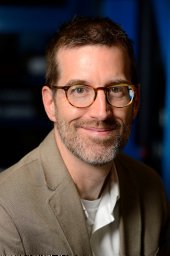
Benjamin Schäfers
Benjamin Schäfer received his Diplom degree in Physics from the University of Magdeburg, Germany in 2013. Pursuing his Ph.D. in Göttingen (Germany) London (United Kingdom) and Tokyo (Japan), he received his Ph.D. degree in physics in 2017 from the University of Göttingen. He has
Scheller College of Business

Now’s the time to become a data-savvy leader with Georgia Tech’s Business Analytics Graduate Certificate. Applications are open for the Spring 2026 start. Visit TechGradCertificates.com to learn more and apply before the August 1 deadline.
TechGradCertificates.com